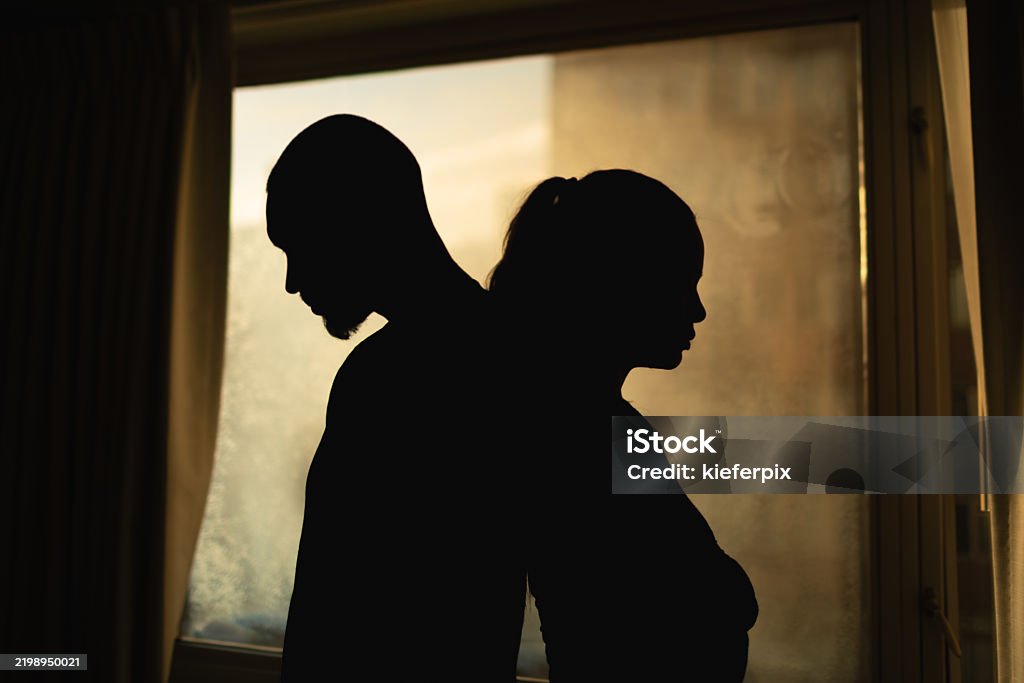
Rebuilding trust after infidelity
Therapy after infidelity is, in large part, about slowing everything down enough that you can think, rather than making the most important decision of your life in the middle of the worst week of it.
Marine Vernet · BACP-registered psychotherapist, London
In the days after an affair comes to light, most couples describe a particular kind of vertigo. The ground that held the relationship, the shared story of who you were to each other, has given way, and both people are left reeling in it. If you're reading this somewhere in that disorientation, I want to offer you one steadying thought before anything else: you do not have to know yet whether the relationship will survive. That question does not need answering today.
Therapy after infidelity is, in large part, about slowing everything down enough that you can think, rather than making the most important decision of your life in the middle of the worst week of it.
The first weeks: stabilising before deciding
The instinct, in the immediate aftermath, is to demand a decision, to stay or to go, to forgive or to end it, as though a verdict would stop the pain. But a decision made in acute distress is rarely a decision at all; it's a reaction to how unbearable the feeling is right now. The first work, then, is not deciding. It's steadying.
What this looks like in the room: often one partner arrives wanting to talk at a hundred miles an hour and the other has gone silent and grey with shock. I'm not, in those first sessions, trying to get you to resolve anything. I'm trying to help you both breathe, to make the sessions a place where the chaos has somewhere to go, so it isn't detonating at the kitchen table at two in the morning. We put a loose structure around the week: when you'll talk about it, when you'll try not to, how you'll each get through a day at work. Betrayal lands in the body as a genuine trauma, sleeplessness, intrusive images, a heart that races at a buzzing phone, and naming it as such, rather than as “overreacting,” is itself part of the steadying.
Only once the ground is a little firmer can the real questions be approached. And those questions, from the start, are both psychodynamic and existential: not only how did this happen, but what did it mean, about each of you, about the life you'd built, about what had gone unspoken in it.
This way of holding the uncertainty is part of how I work.
Disclosure: how much detail helps and how much harms
One of the most painful early tangles is disclosure: how much the betrayed partner should know. The hurt partner is often gripped by a need to know everything, every message, every location, every detail, in the hope that complete information will make the betrayal finally graspable, controllable, survivable.
Here honesty and detail are not the same thing, and the distinction matters enormously. The partner who strayed owes full honesty: no more lies, no trickle of half-truths that re-breaks the trust each time another fact emerges. But graphic sexual detail, exhaustively recounted, rarely heals, it tends to brand images into the hurt partner's mind that then intrude for months. What genuinely helps is honest answers to the questions that are really about meaning and safety: were you going to leave, did you think of me, am I at risk, who else knew.
What this looks like in the room: a betrayed partner might ask, again and again, a question that no factual answer ever quite settles — “but why?” I understand that question as the important one, and also as one that facts can't close, because what's being asked isn't really for information. It's “how could the person I trusted most have done this, and who are you, now, to me?” That is the existential wound beneath the forensic questions, and it's the one therapy actually works on. Part of my role is to help the couple tell the difference between the questions that bring understanding and the ones that only deepen the injury, and to slow the disclosure to a pace that informs without re-traumatising.
What repair actually requires from both partners
Here is something couples are often surprised to hear: rebuilding trust is work for both partners, not only the one who betrayed. That is not for a moment to divide the responsibility for the affair; the choice to stray belonged to the person who made it. But the choice to rebuild has to be made by two people, or it cannot hold.
From the partner who strayed, repair asks for more than apology. It asks for sustained, patient accountability, a willingness to be transparent without resentment, to tolerate the hurt partner's distress without defensiveness, and to keep showing up to the feeling long after they themselves would rather move on. From the betrayed partner, in time, it asks for a willingness to let repair actually land, to allow, eventually, for the possibility of trust again, which can feel frighteningly like dropping one's guard.
What this looks like in the room: the unfaithful partner often says, maybe six weeks in, “I've said sorry a hundred times, how long is this going to take?” That question, gently examined, usually reveals that they're wanting to be forgiven more than they're wanting to understand what the affair was for, what need, loneliness or avoidance in themselves or in the relationship it was quietly answering. The psychodynamic work is exactly there: an affair almost always means something, and couples who rebuild successfully are the ones willing to understand that meaning rather than seal it over. This is the deeper layer beneath ordinary couples therapy, and it's slow, honest work.
You can also read about what actually happens in couples therapy.
When separating is the healthier outcome
I want to be honest, because I think you deserve honesty rather than reassurance: not every relationship should be rebuilt, and therapy is not a machine for keeping couples together. Sometimes the most caring outcome of this work is a decision to part.
What this looks like in the room: occasionally, as the fog lifts, one or both people become quietly clear that the affair named something that was already over, that the relationship had become a shell, or that the betrayal, once seen fully, is not something they can or wish to build on. When that clarity arrives, my work shifts: not to persuade anyone to stay, but to help you separate with as much honesty and dignity as possible, which matters especially where there are children, and where you'll remain in each other's lives. A well-ended relationship spares both people years of lingering damage. I hold your relationship and both of you within it; I never take a side, and I never push a verdict.
Read more about the relationship difficulties I work with.
How this work is paced in therapy
Affair recovery is not quick, and anyone promising a fixed number of sessions to “fix” it should be treated with suspicion. In my experience it moves, unevenly, through roughly three movements: first the stabilising I described; then a longer middle stretch of understanding — what happened, what it meant, what had gone unsaid in the relationship long before; and finally, if the couple is rebuilding, the slow reconstruction of trust through consistency repeated over time, because trust is rebuilt by evidence, not by promises.
We usually begin weekly, because momentum matters while things are raw, and the pace eases as the crisis settles. Progress is rarely linear, a good month is often followed by a hard week when an anniversary, a place, or a song pulls everything back to the surface, and that is normal rather than a sign of failure. Some of this work is done together; sometimes I'll suggest individual sessions alongside, because each partner has their own meaning to make of it. Sessions are available in English or French, in person across London or online.
You do not have to decide before you begin
If you're in the middle of this, you don't have to find your way through it alone, and you don't have to have decided anything to begin. You're welcome to arrange a free 15-minute introductory call, a first, unpressured step towards thinking clearly again.
Book a free 15-minute call