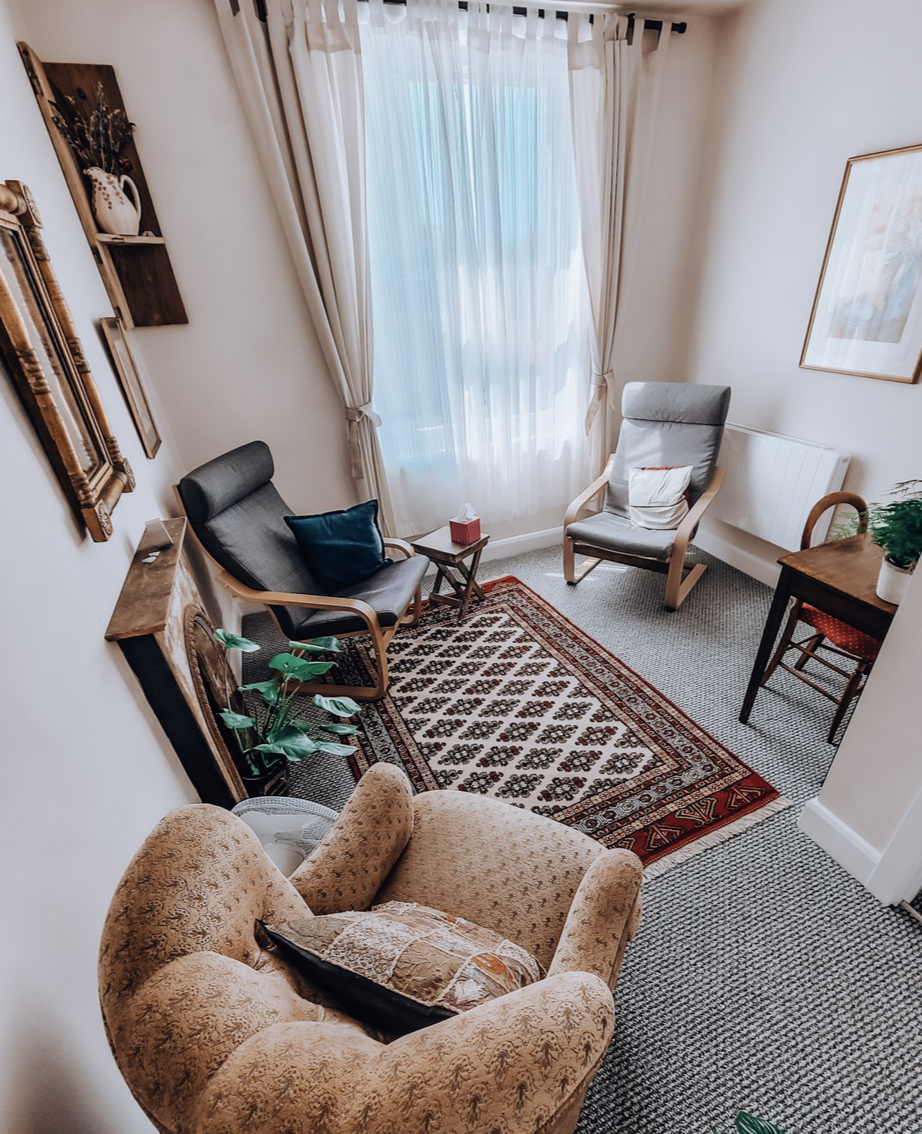
Couples therapy in London: what actually happens
Most people arrive at couples therapy knowing far more about what they're afraid of than about what the room is actually like.
Marine Vernet · BACP-registered psychotherapist, London
60 minutes: £100 · 90 minutes: £120 · In person in London or online
Book a free 15-minute callMost people arrive at couples therapy knowing far more about what they're afraid of than about what the room is actually like. They imagine being made to talk about feelings on cue, or worse, sitting through a kind of trial in which someone is found guilty. So before anything else, let me tell you plainly how couples therapy in London tends to work when you come to see me — because the reality is quieter, more ordinary, and more hopeful than the version people dread.
I work with couples of all kinds: married and unmarried, together for decades or only a couple of years, straight and queer, and partners trying to decide whether to stay together at all. What they share is usually a sense of being stuck in something they can no longer solve on their own.
When couples come to therapy (and when they wait too long)
Couples often come to see me at a specific breaking point — an affair, a decision about children, a move, a loss — but just as often they come because something quieter has set in. The same argument on a loop. A politeness that has replaced warmth. A feeling of living as competent housemates rather than lovers. None of these is dramatic on its own, which is exactly why they get tolerated for years.
If there is one thing I'd gently change about how people use therapy, it's the timing. The most common thing I hear in a first session is a version of "we probably should have done this ages ago." Couples tend to wait until resentment has hardened, when the same conversation started a year earlier would have been far easier. You do not need to be in crisis to come. Wanting things to be better than "fine" is reason enough.
What the first session looks like — 60 or 90 minutes
The first session is mostly about getting to know the two of you and the relationship between you — which is, in a sense, my third client in the room. I'll usually ask what brought you now, how each of you sees the difficulty, and something of your history together: how you met, what worked, when things shifted. You won't be asked to perform intimacy or to rake over everything at once. A first couples session runs to 60 or 90 minutes depending on what we agree, and longer formats often suit couples because there's more ground to cover with two people.
You should both leave that first session with a clearer sense of what's actually going on and whether working with me feels right. Fit matters enormously in this work, and you're allowed to notice whether the room feels safe for you both.
What I am listening for: patterns, not blame
Here is the thing I most want you to know, because it's usually the thing people are most anxious about: I am not there to decide who is right. I don't referee, I don't keep score, and I don't take sides. My allegiance is to the relationship and to both of you within it — which sometimes means holding a truth neither of you wants to say first.
What I'm actually listening for is the pattern. Drawing on the research of the Gottman Institute, I pay close attention to how the two of you argue rather than what you argue about — because much of what damages couples lives in the how. I watch for the moves that reliably corrode connection over time: criticism that slides into contempt, defensiveness that meets every concern with a counter-charge, the withdrawal that leaves one partner talking to a closed door. These are learnable patterns, not character flaws, and naming them takes the heat off the people and puts it onto the dynamic you're both caught in.
It also helps to know that the research is oddly reassuring here: the majority of the disagreements couples have are not solvable problems at all — they're perpetual differences between two different people. The aim, then, isn't to win them or eliminate them, but to find a way of having them that keeps you close rather than pushing you apart. Alongside this practical work I bring a more existential lens, drawn from how I work: underneath the logistics, most couples are really asking how they want to live, what they owe each other, and whether they can keep choosing this relationship freely rather than out of habit or fear.
I'll sometimes borrow an image from the poet Octavio Paz, who described love and desire as distinct flames rising from the same fire — the point being that eroticism is far more than the physical; it's a form of sustained attention and imagination toward another person. A great deal of what goes quiet in long relationships is that attention, not the feeling underneath it. Part of the work is learning to turn back toward each other — in the small daily bids for connection as much as the grand gestures.
If one of you is unsure about coming
Very often, one partner books and the other agrees reluctantly. If that's you — the one who isn't sure, who suspects therapy is for other kinds of couples, or who worries you'll be outnumbered two-to-one — I want to speak to you directly: your scepticism is welcome in the room, and it will not be treated as the problem to be fixed.
I take real care not to let a session become an ambush. You will not be cornered, diagnosed, or told what you feel. Ambivalence about therapy is normal and often sensible, and it's something we can talk about openly rather than push past. Many of the couples I've worked with began with one enthusiastic partner and one at the door with their coat on — and the reluctant one frequently turns out to get the most from it, precisely because they came in with their guard up and their honesty intact.
Weekly or fortnightly: pacing and cost
Couples therapy usually works best with some rhythm to it, at least at the start. Many couples begin weekly so that momentum builds and the work doesn't reset each time, then move to fortnightly as things steady. Some pieces of work are relatively short and focused; others, particularly where trust has been broken or a decision is being weighed, take longer. We'll talk about pacing openly, and you're never locked into a fixed number of sessions — this is your process, not a programme.
I see couples in person at my therapy rooms in Chelsea, Clapham and Soho, and online for those who prefer it or live further afield. Details of session length and fees are best discussed on a short call, so we can match the format to what you actually need.
Does couples therapy work?
It's the fair question, and the honest answer is: often, yes — though not always in the way people first imagine. Sometimes the work rebuilds a relationship that both people recommit to. Sometimes it helps a couple separate with far more kindness and less damage than they would have managed alone. What it reliably does, when both partners engage, is replace a stuck, blaming loop with a clearer understanding of what's happening between you and a real choice about what to do next.
Related reading: why couples have the same argument over and over — the patterns behind recurring arguments, and two things to try before the next one.
If an affair has come to light, read about rebuilding trust after infidelity.
If you recognise yourselves anywhere in this
You're welcome to book a free 15-minute introductory call. There's no obligation in a first conversation — only the chance to find out whether this might help. You can also read more about the relationship difficulties I work with.
Book a free 15-minute callFrequently asked questions
Does couples therapy work?
For many couples, yes. When both partners engage, it consistently helps replace a stuck, blaming cycle with real understanding and a genuine choice about the future — whether that means rebuilding the relationship or, sometimes, parting more kindly.
Will you take my partner's side?
No. I don't referee or decide who's right. I stay neutral and work on behalf of the relationship and both of you within it, which means neither partner is treated as the problem.
What happens in the first couples session?
We get to know each other. I'll ask what brought you now, how each of you sees the difficulty, and something of your history together. It runs 60 or 90 minutes, and you'll both leave with a clearer picture and a sense of whether working together feels right.
What if one of us is reluctant?
That's very common and completely welcome. Scepticism isn't treated as a fault, and sessions are never an ambush. Reluctant partners often get a great deal from the work once they see how it actually goes.
How often would we meet?
Many couples start weekly to build momentum, then move to fortnightly as things settle. There's no fixed course — we agree the pacing together and adjust it as needed.